
How Much Does It Cost to Start a Pressure Washing Business in 2026?
June 16, 2026
Pressure washing is one of the more honest business opportunities out there. The demand is real, the startup costs are manageable compared to most trades, and you can be generating revenue within weeks of deciding to go for it. But a lot of people get into trouble early because they budget for the equipment and forget everything else, or they go too cheap on the setup and spend the next six months outgrowing it.
The real answer to "how much does it cost to start?" depends entirely on what kind of business you are actually trying to build. A weekend side hustle out of the back of a pickup truck looks nothing like a two-truck operation chasing commercial contracts. Both are legitimate paths. But the numbers, and the decisions behind them, are completely different.
This blog breaks down what you can realistically expect to spend at each level, what you get for the money, and where investing a little more upfront saves you a serious amount of frustration later.
The Three Ways People Start a Pressure Washing Business
Most people entering this industry fall into one of three categories.
The first is someone who wants to test the market with as little risk as possible, put some cash in their pocket, and figure out if this is actually for them before committing big.
The second is someone who is serious from day one and wants a real small business setup that can handle consistent residential work and grow over time.
The third is someone who already knows what they want: commercial contracts, multi-job days, and a trailer-based operation built to last.
Each of those paths has a different cost structure, and understanding which one fits your situation is worth more than any specific dollar figure.
The Bare-Bones Residential Start: $600 to $1,050 in Equipment
If you want to get started as lean as possible, you can put together a functional setup for under $1,100 in equipment. This is the path for someone who wants to test residential jobs in their area before making a bigger investment.
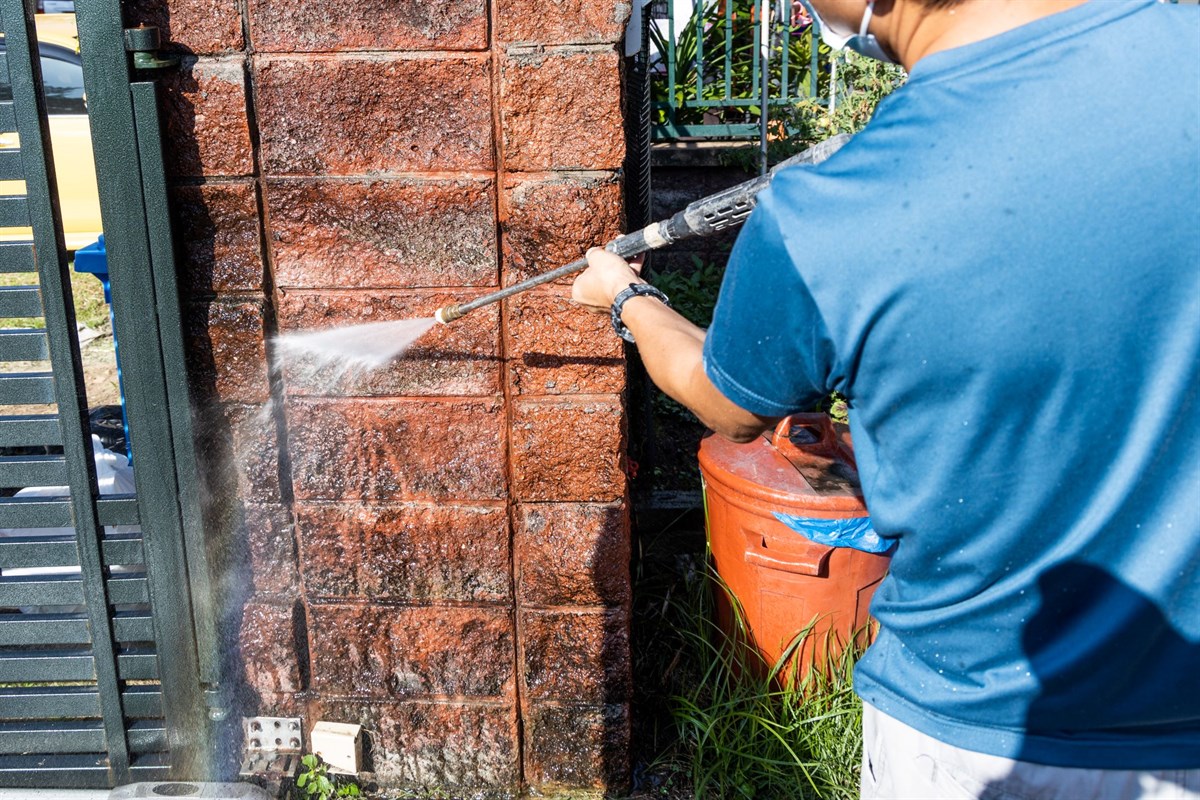
The core of a minimal setup is a gas-powered pressure washer in the 3,000 to 4,000 PSI range, which runs roughly $300 to $600 for a reliable unit. Add a 50-foot high-pressure hose at $50 to $100, a basic nozzle set with a turbo tip at $30 to $50, a small surface cleaner at $100 to $200, and a few gallons of all-purpose cleaning detergent for around $100. That puts your equipment total somewhere between $600 and $1,050.
That setup will handle driveways, sidewalks, fences, and basic home exteriors. It will not make you competitive on commercial bids, and it will not give you the water supply independence that a trailer rig provides. But it is enough to start landing residential jobs, building a client base, and validating that there is real demand in your market.
What this setup lacks is scale. If you are working out of a truck without a dedicated water tank, you are dependent on the customer having a water supply available at every job. You are also loading and unloading equipment manually every day, which adds up fast when you are running multiple stops. It works. It is just not built to grow.
The Real Small Business Launch: $2,000 to $5,000 and Beyond
Once you factor in what it actually costs to operate a business, not just the equipment, the number climbs. That is not a reason to panic. It is a reason to plan accurately so you are not caught short in the first few months.
Insurance is the most important cost most new operators underestimate. General liability coverage for a solo pressure washing operator typically runs $500 to $2,000 per year depending on your state, coverage limits, and whether you are adding commercial work. This is not optional. One chemical runoff complaint, one damaged vehicle, or one client property issue without coverage and the business is over before it started. Get insured before you take your first job.
Business licenses and permits vary by location, but budgeting $50 to $200 covers most local registration and operating permit costs. Some municipalities have specific permits required for commercial washing operations that involve wastewater, so check what applies in your area before you start bidding on that type of work.
Marketing is the expense that surprises a lot of first-year operators. Word of mouth works eventually, but it is slow to start. A basic setup that can actually generate leads in 2026 needs, at a minimum, a Google Business profile with photos and reviews, a simple website, and some way to collect and display customer feedback. Putting together even a basic web presence and some printed materials realistically costs $300 to $1,000 upfront. That is a marketing budget, not a luxury.
When you add insurance, registration, supplies, a basic marketing presence, and operating costs like fuel and chemicals to even the minimal equipment setup, a practical first-year budget lands somewhere between $2,000 and $5,000. That is the actual number a serious residential operator needs to get off the ground and run for the first few months without running out of runway.
The Trailer-Based Professional Setup: $15,000 to $20,500
When you are ready to stop limping along with mismatched gear and build something you can actually scale, a trailer-mounted system changes the math entirely. Everything you need moves with you: the machine, the water supply, the hoses, the chemicals. You show up to a job ready to work and leave ready for the next one, without unloading and reloading equipment every time.
For residential operations, The Mud Puppy at $14,995 is the starting point. Add a set of hoses and nozzles for around $200, a quality surface cleaner for $300, and your initial chemical supply for $200, and you are looking at a total setup cost of approximately $15,695. That is a complete, professional residential operation on a single trailer that you can pull to any job site.
For contractors who are targeting commercial accounts, facilities maintenance, fleet washing, or larger-scale flat work, The Mud Dog Trailer at $18,995 is the right conversation. Add heavy-duty hoses and nozzles for $500, a commercial-grade surface cleaner for $500, and a startup chemical supply for $500, and the all-in commercial setup comes to around $20,495. That is a rig built to run hard, handle bigger jobs, and support a crew rather than just one operator.
The trailer lineup goes further from there. The
8GPM Super Mud Dog
, the
Bulletproof Mud Dog
, and
The Beast
are for operators who are running volume, bidding large contracts, or building a multi-truck operation that needs to perform at a higher level every day. If you want to understand the full breakdown of features and which system fits your work type, the
Mud Dog trailer lineup
is worth spending some time with.
What You Actually Get for the Extra Investment
The gap between a $1,000 minimal setup and a $15,000 to $20,000 trailer rig is not just about equipment quality, though quality matters. It is about what the setup lets you do in the field.
A trailer-based system gives you water independence. You are not asking every customer to run a hose from the side of their house, and you are not stuck at jobs that happen to have accessible water supplies. You drive to the site, connect nothing, and start working. That alone changes the types of jobs you can bid on.
It gives you professional credibility. There is a measurable difference in how commercial clients respond to a contractor who pulls up with a dedicated, purpose-built trailer versus someone working out of a pickup with a borrowed machine in the bed. You look like you do this for a living because you do.
It also gives you time. A system built around higher GPM output cleans faster. More output per hour means more jobs per day, more revenue, and less time per square foot. That is the number that matters when you are trying to figure out whether the investment pays off.
For a complete rundown on what gear a new operator needs and how to think about building out a starter kit, the Mud Dog guide on
what equipment you need to start a pressure washing business
lays it out clearly.
How Quickly Can You Recoup the Investment?
The revenue potential in pressure washing varies by market and service mix, but the numbers are not complicated. Residential jobs typically run $100 to $300 per service. Commercial work is quoted on square footage, surface type, and complexity, and the per-job revenue is significantly higher. A contractor running five residential jobs per day at an average of $175 per job is generating $875 on a good day. Even at three jobs a day, every day, five days a week, a $15,000 trailer investment pays itself off in a matter of months. Also with financing and other payment methods, your expenses can be paid over years without having all the cash upfront.
The practical question is not whether the trailer is expensive. It is how many jobs you can take on with it versus without it, and whether the revenue difference justifies the cost. For most contractors who are serious about building a real operation, the answer is straightforward.
Other Costs Most People Miss
Beyond equipment and early marketing, there are a few ongoing costs worth planning for before they catch you off guard.
-
Fuel: Running a gas-powered trailer rig through a full week of jobs burns real fuel, and gas prices in 2026 are not doing anyone any favors. Build it into your job pricing so it does not quietly eat your margin.
-
Chemical supply: At $20 to $70 per gallon for commercial detergents and degreasers, a busy week of jobs goes through more product than most new operators expect. Buying in bulk once you know your volume requirements is one of the easiest ways to protect your margins.
-
Equipment maintenance and parts: Oil changes, pump servicing, nozzle replacement, hose inspection and replacement over time. None of it is catastrophic individually, but ignoring it entirely is how a $15,000 trailer turns into a repair bill that sidelines the business.
Build Your Business with Mud Dog Trailers
If you are genuinely new and still figuring out whether there is demand in your area, starting lean and proving the concept makes sense. Spend $600 to $1,000 on a minimal setup, take the first few jobs, and see what the market looks like before committing more.
If you have already decided this is the business and you want to build it correctly from the start, skipping the minimal-setup phase and investing in a proper trailer rig from the beginning is often the smarter financial decision. You spend less time outgrowing equipment, you look more credible to commercial clients from day one, and you are not retrofitting a real operation onto a budget setup nine months in.
Whatever stage you are at, the Mud Dog team is worth talking to before you make a decision.
Explore the full trailer lineup
, or
reach out directly
if you want a straightforward conversation about which setup actually fits the work you are trying to do.
Read More