
Soft Wash vs Pressure Wash: Which Jobs Need Which Setup?
October 16, 2026
If you have been in this business for more than a few months, someone has probably asked you whether you do soft washing. Maybe it was a homeowner who heard about it online and wants their roof done without it getting blasted apart. Maybe it was a property manager who had a bad experience with a contractor who pressure washed siding that was not built for it. Or maybe you are the one asking the question, trying to figure out whether adding soft wash capability to your operation is worth the investment.
The honest answer is that pressure washing and soft washing are not competing methods. They solve different problems. Knowing which one to reach for on a given surface is the kind of knowledge that separates contractors who do good work from contractors who get callbacks and damage claims. This post breaks down exactly how to think about it, surface by surface, and what it means for the equipment you are running.
The Core Difference: Force vs. Chemistry
Pressure washing uses high-pressure water to physically remove dirt, grime, and buildup from a surface. The water is doing the work. Soft washing flips that equation. You are using a chemical solution, typically a diluted bleach mix with a surfactant, applied at very low pressure. The chemistry does the work and the water rinses it away.
That distinction matters more than people give it credit for. High-pressure water is exceptionally effective at removing surface-level deposits from hard, durable materials. But it does nothing to kill the mold, algae, or mildew that is living on the surface. Soft washing kills the organic growth at the root. That is why a soft-washed roof or siding job tends to stay cleaner longer than one that got blasted with a pressure washer.
The flip side is that soft washing is not the right tool for oil-stained concrete, heavily soiled industrial equipment, or any situation where you need to physically remove something thick and stubborn from a hard surface. Chemistry alone will not strip a grease-caked truck bay floor. That is what high pressure and hot water are built for.
Understanding which problem you are actually solving on each job is the whole game.
When to Reach for the Pressure Washer
Concrete is the clearest case. Driveways, sidewalks, parking lots, loading docks, and flat concrete surfaces are exactly what pressure washing was built for. Concrete is dense and hard. It can handle the force, and it usually needs it. Dirt, oil, tire marks, and general grime get physically pushed out of the surface pores by the combination of high pressure and, ideally, hot water. A surface cleaner attachment at 2,500 to 3,000 PSI will clean a driveway faster and more evenly than almost any other approach.
For oil and grease specifically, hot water is a significant upgrade over cold. Hot water breaks down petroleum-based contamination in a way that cold water simply cannot replicate. If you are doing fleet washing, parking garages, restaurant loading areas, or any commercial work where grease is a regular part of the job, a hot water trailer setup is not a luxury. It is what makes the job possible without standing there forever. That is the core value proposition behind the Mud Dog trailer lineup for commercial operators.
Brick patios and stone surfaces can also take moderate pressure washing, typically in the 1,200 to 2,000 PSI range with a wide fan tip. The main thing to watch on masonry is older mortar. If the joints are already soft or crumbling, high pressure accelerates that damage. On a well-maintained masonry surface in good condition, pressure washing works well and produces fast results.
Metal equipment, commercial trailers, and heavy machinery generally respond well to pressure washing with a degreaser and hot water. You get the combination of force and chemistry working together, which is what makes those jobs efficient.
When Soft Washing Is the Right Call
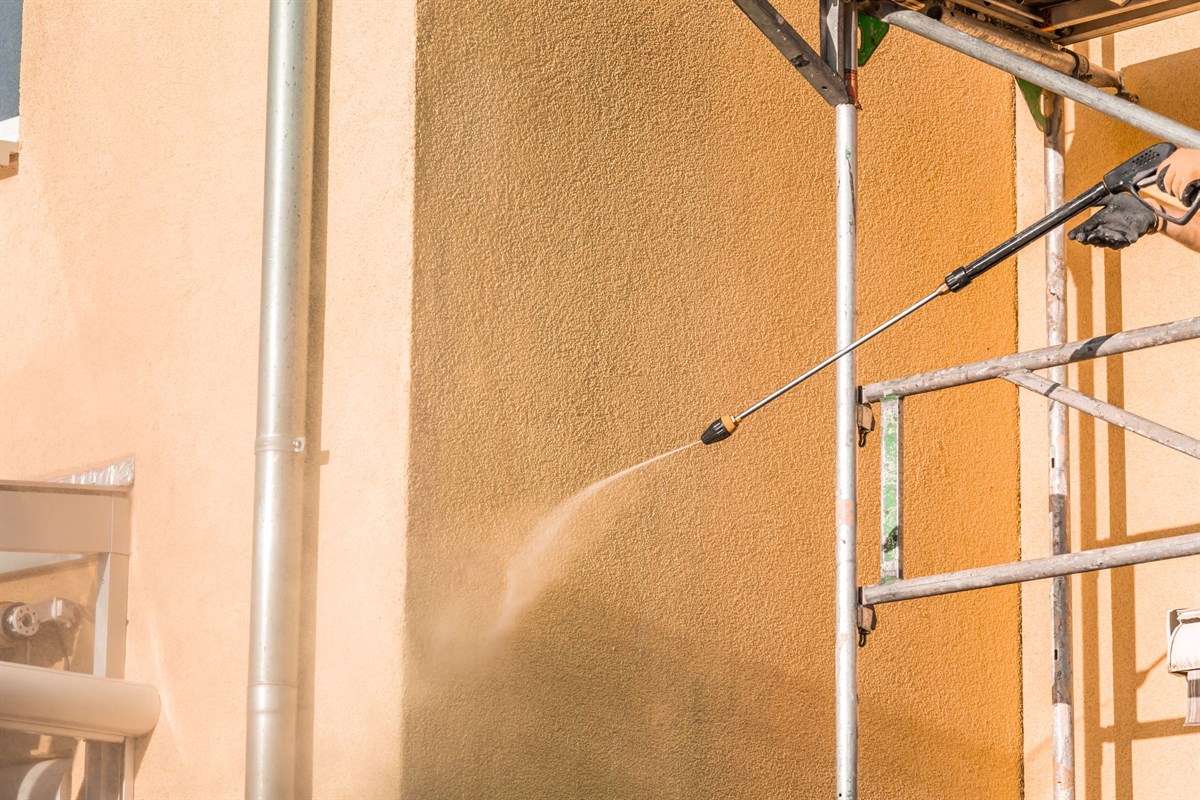
Roofs are the clearest example of where soft washing is not optional. Asphalt shingle roofs are not built to withstand direct high-pressure impact. The granules on shingle surfaces provide UV protection and waterproofing, and high pressure strips them off. A contractor who pressure washes an asphalt roof is effectively shortening the lifespan of that roof and potentially creating a liability problem for themselves. Soft washing, using a diluted bleach solution at under 300 PSI, kills the algae and moss that cause those dark stains and lets the solution do its job without any physical damage to the shingles.
The typical roof soft wash mix runs around three percent sodium hypochlorite with a surfactant added to improve coverage and dwell time. You apply it with a wide fan tip from a low-pressure pump system, let it sit for fifteen to twenty minutes, then rinse gently. The results hold up well because the biology causing the problem has been killed, not just washed off the surface.
Vinyl siding is another one that gets damaged by contractors who do not know better. Vinyl can crack under high pressure, and more commonly, water gets forced behind the siding into the wall cavity, which creates moisture problems the homeowner does not discover until much later. Low-pressure soft washing with a one to two percent bleach solution and a surfactant handles mildew and dirt on vinyl effectively without any of that risk.
Wood siding, painted wood, fiber cement, stucco, and EIFS (the synthetic stucco system used on a lot of commercial buildings) all belong in the soft wash category. These surfaces are either too fragile for direct high-pressure contact, or they are holding a paint or coating that will be damaged by it. Soft washing cleans them properly, preserves the finish, and keeps the contractor out of trouble.
Wood decks and fences are a middle case. Bare wood can handle low-to-moderate pressure, around 500 PSI with a wide tip, if you are careful. But the safer and more effective approach for mildew-covered decking is soft washing with an oxygen-bleach based cleaner, followed by a gentle rinse and a wood brightener if the deck is going to be re-sealed afterward. That process produces a better-looking result with less risk of raising the grain or splintering the wood.
Chemical Management and Safety
Soft wash chemicals are not casual products. Sodium hypochlorite at working concentrations is strong enough to cause serious skin and eye burns if you are not careful, and the mist that comes off a soft wash application can drift if you are not paying attention to wind direction. Chemical-resistant gloves, a full face shield, and long sleeves are the baseline for every soft wash job. If you are doing overhead application, like working up under soffits or applying solution to a roof from below, a respirator is worth having on hand.
Nozzle selection matters a lot on the chemical side. Soft wash nozzles are designed with larger orifices to move volume at low pressure. Using a standard pressure wash nozzle even at low pressure output changes the spray characteristics and can damage surfaces you were trying to protect. Keep your soft wash tips separate from your pressure tips and make sure everyone on the crew knows which is which.
On the pressure washing side, the main safety concerns are the obvious ones: never point the wand at anyone, keep the safety lock engaged when you are not actively spraying, and match your nozzle to the surface. A zero-degree nozzle has its place in industrial work with extremely heavy buildup. It has no place on a residential driveway or anywhere near painted or coated surfaces. The 25-degree tip and a surface cleaner attachment handle the vast majority of pressure washing applications well and reduce the risk of etching or gouging surfaces.
If you are interested in learning more about pressure washing attachments check out our full guide.
The Takeaway
Soft washing and pressure washing are tools, and like any tools, they work well when you match them to the right job and poorly when you do not. High pressure and hot water are the right approach for concrete, metal, heavy grime, and any surface that is built to handle force. Low pressure and chemistry are the right approach for roofs, siding, wood, and any surface where the problem is biological growth on something that cannot take a beating.
The contractors doing the most consistent quality work are not choosing between the two. They understand when each applies, they have the equipment to deliver both, and they price their jobs accordingly.
If you are thinking through what a more capable rig looks like for the kind of work you are building toward, browse the Mud Dog trailer lineup or reach out to the team. We are happy to talk through what you are doing, what you want to be doing, and what kind of setup actually makes sense for getting there.